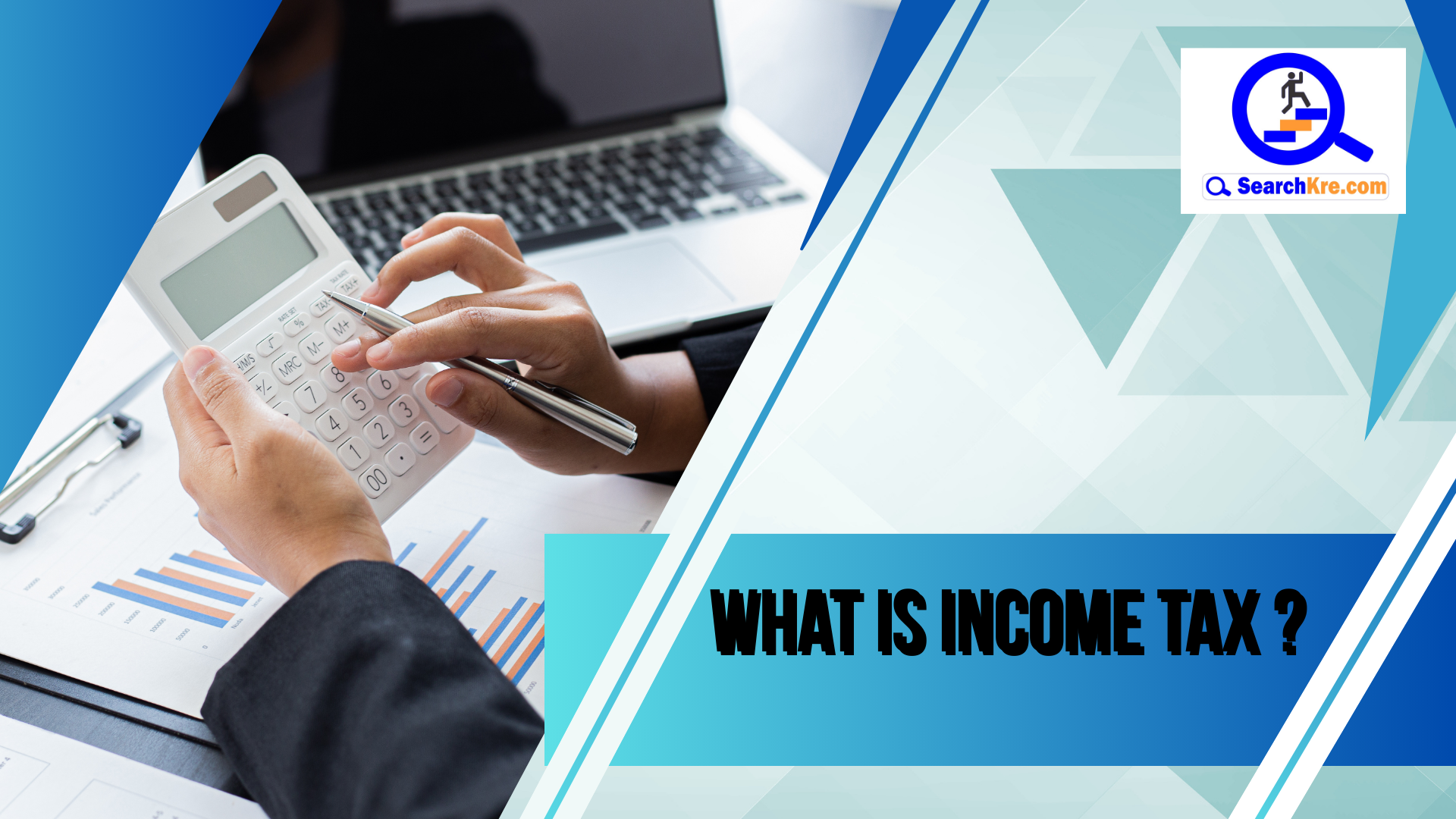
Income Tax: What, Why, and How? — A Comprehensive Blog
jpsingh
2025-11-25 14:48:29
736041978
Income tax is a crucial part of every working person's life in India. Whether you're employed, run a business, or freelance—if your income exceeds a government-defined threshold, you're required to pay income tax. It's not only a major source of government revenue, but also plays a vital role in strengthening the country's development, security, education, health, and infrastructure.
What is Income Tax?
Income tax is the tax that individuals or organizations pay to the government on their total annual income. This tax is a direct tax, meaning individuals pay it directly from their earnings.
The government collects taxes through the Income Tax Department. Income tax is primarily spent on the following activities:
Building roads, railways, airports, etc. Running government schools and hospitals, Comprehensive national security, Schemes for the poor, Employment and industrial development
Who1. Salaried employees Businesspeople, Freelancers/Professionals, Companies, firms, LLPs, and organizations, Rent-earning property, Investment income (e.g., fixed deposits, shares, mutual funds) pays income tax?
How is income tax calculated?
Income tax is calculated based on your total taxable income and the tax slab set by the government. There are currently two types of tax systems in India:
1. New Tax Regime It has fewer tax slabs, but not many exemptions/deductions.
2. Old Tax Regime More slabs, but many exemptions and deductions are available.
Why is Income Tax Necessary?
Income tax is the economic backbone of any country. Important reasons for this are:
Funds for national development, Salaries of government employees, Army, police, and security system, Social welfare schemes, Health, education, and subsidies
If people stopped paying taxes, the country's system would come to a standstill.
Sources of Income That Are Taxable
According to the Income Tax Act, your income falls into five major categories:
. Income from Salary, Income from House/Property, Income from Business and Profession, Capital Gains (Sale of Shares, Property), Income from Other Sources (Interest, Lottery, Gifts)
What is an Income Tax Return (ITR)?
The ITR is a form in which you inform the government of your income and the tax paid. Different ITR forms are available depending on the type and amount of income:
ITR1: Normal Salaried
ITR2: Investment/Capital Gains
ITR3: Business/Profession
ITR4: Presumptive Taxation
Filing an ITR is beneficial for you in many ways.
Benefits of Filing ITR
1. Loan Availability Easier
2. Visa Approval Easier
3. Tax Refunds Available
4. Legal Protection Provided
5. Income Proof Available
Major Income Tax Exemptions and Deductions (Old Regime)
Section 80C – Up to ₹1.5 lakh (LIC, PPF, PF, ELSS, etc.)
Section 80D – Health Insurance Premium
Section 80G – Deduction on Donations
HRA – On Rented Accommodation
LTA – On Travel Expenses
Home Loan Interest (Section 24) – Up to ₹2 lakh
Common Income Tax Mistakes
Choosing the wrong ITR form, Hidden income, Understanding tax exemption due to TDS, Not including bank interest, Not filing the ITR on time
Conclusion :- Paying income tax is the duty of every responsible citizen. It is not only a source of income for the government but also the foundation of the country's development, security, and social welfare.


 Gst Registration
  DSC Registration
  Pancard Registration
  Company Registration
  Fssai Registration
  TradeMark Registration
  MSME Registration
  Passport Registration
  Income Tax Return
  LLP Company Registration
  Marriage And Court Marriage Registration
  PVT LTD Company Registration
  GST Filing Services
  Coaching Insititute Registration
  GYM Registration
  NGO Registration
  Political Party Registration
  Society Registration
  Advertise ( Digial Marketing Services Booking )
  Make Website on EMI

























































































 9th Class Scholarship Competition Test
  10th Class Scholarship Competition Test
  11th Class Scholarship Competition Test
  12th Class Scholarship Competition Test
  Graduation Scholarship Competition Test
  Post Graduation Scholarship Competition Test
  Diploma Scholarship Competition Test
  Police Recruitment Coaching Scholarship Competition Test
  Banking Recruitment Coaching Scholarship Competition Test
  UPSC Recruitment Coaching Scholarship Competition Test
  JEE Coaching Scholarship Competition Test
  NEET Coaching Scholarship Competition Test
  Army Recruitment Coaching Scholarship Competition Test
  Railway Recruitment Coaching Scholarship Competition Test
  UP Police Recruitment Coaching Scholarship Competition Test
  PCS Recruitment Coaching Scholarship Competition Test
  PCSJ Recruitment Coaching Scholarship Competition Test
  APO Recruitment Coaching Scholarship Competition Test
  NDA Recruitment Coaching Scholarship Competition Test
  Lower PCS Recruitment Coaching Scholarship Competition Test